
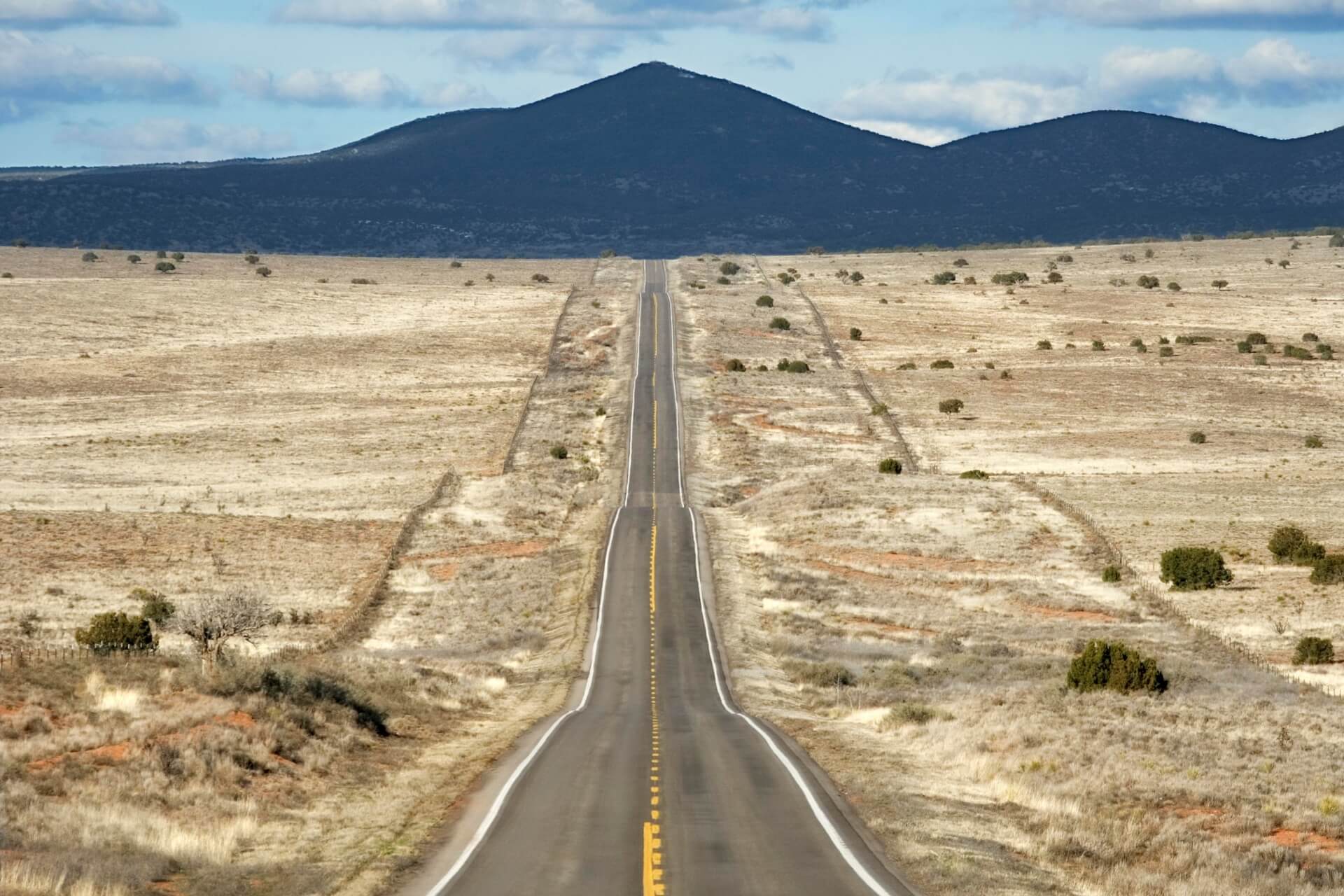
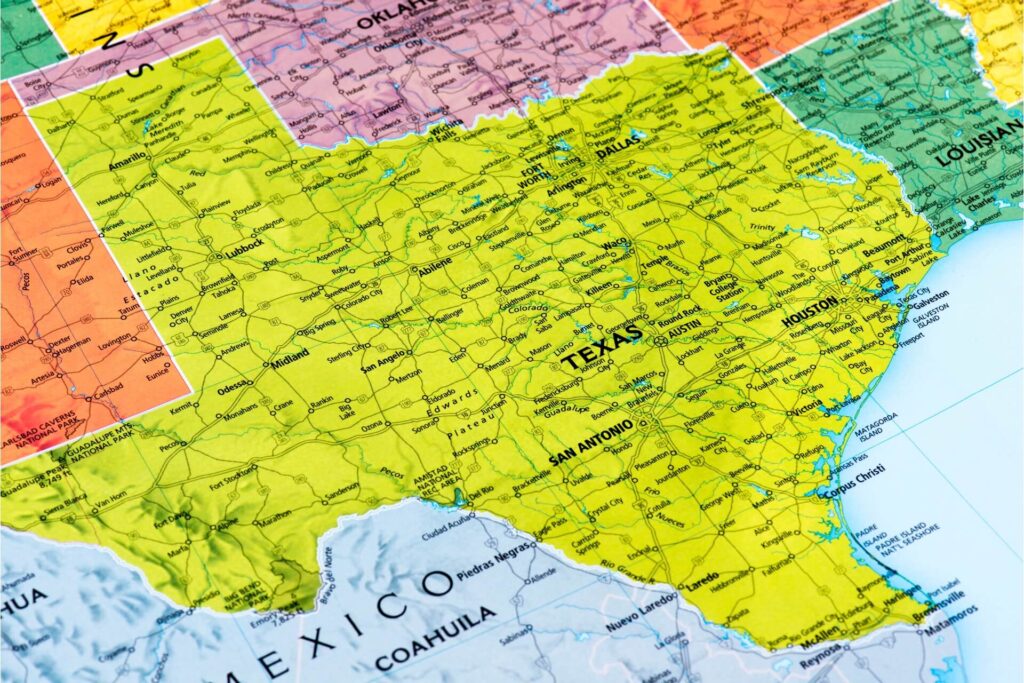
Texas, with its population of 20 million, is the second largest state in the United States, after Alaska. Stretching over 268,596 square miles, it is understandably extremely diverse and with a great assortment of distinctive climates. Plains, hills, and plateaus characterize most of the Texan landscape. The southern part is occupied by the Coastal Plain that stretches from Florida to Mexico. It is relatively flat, with elevations no higher than 200 meters above sea level. Instead, Central Texas is known for its plateaus and hills, while the westernmost part is occupied by the Chihuahua Desert.
The climate of Texas reflects these morphological differences. The south has a humid climate, with rainfall evenly distributed throughout the year. In the center of the state, the climate is basically continental, while an arid climate prevails in the desert.
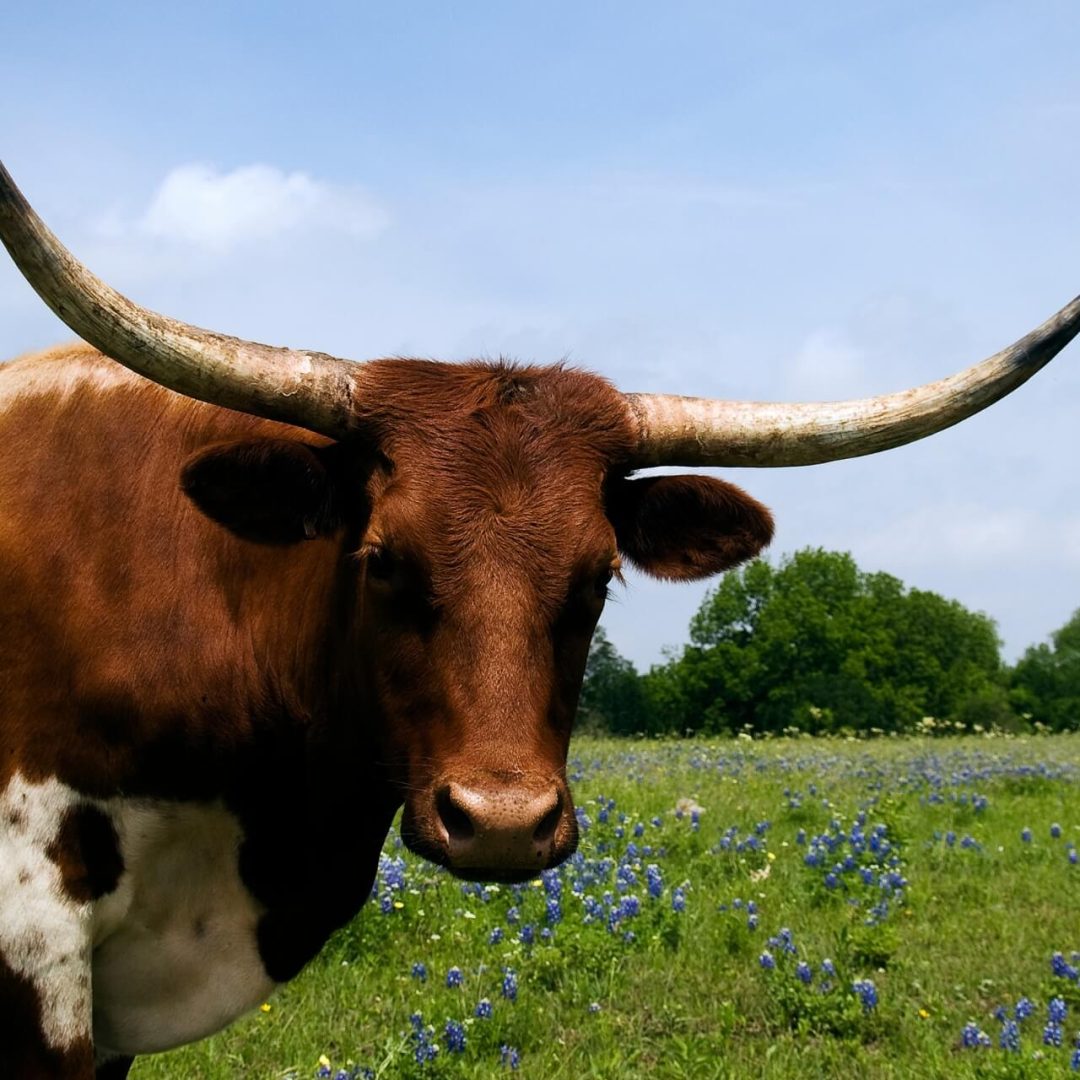
Texas occupies a prominent place in the economic landscape of the United States. Energy-wise, the country has about a quarter of the hydrocarbon reserves of the entire US. However, Texas has recently diversified its energy production, quickly becoming a leader in renewable energy generation, particularly wind power. The 144 wind farms installed across the state make the most of its 22,000 MW of wind power capacity, while with its more than 250,000 farms and ranches Texas is the U.S. state with the most heads of cattle.




Origin of the name Texas and state motto
The name Texas derives from the word Tejas in the Native American language Caddo which means allies, friends. The word was initially used by Spanish explorers to greet the local people and over time it was used to describe the site of their settlements. The Texas motto – aptly “friendship” – also derives from the word. The motto was officially adopted in February 1930, although, unlike most states in the United States, it appears neither on the official seal nor on the flag.
Interestingly, from 1836 to 1845, the official motto of the state of Texas was “Remember the Alamo”, the cry of the Texas revolutionaries at the Battle of San Jacinto, one of the decisive events for Texas independence, and proudly displayed on the state seal.
Texas: flag and nickname
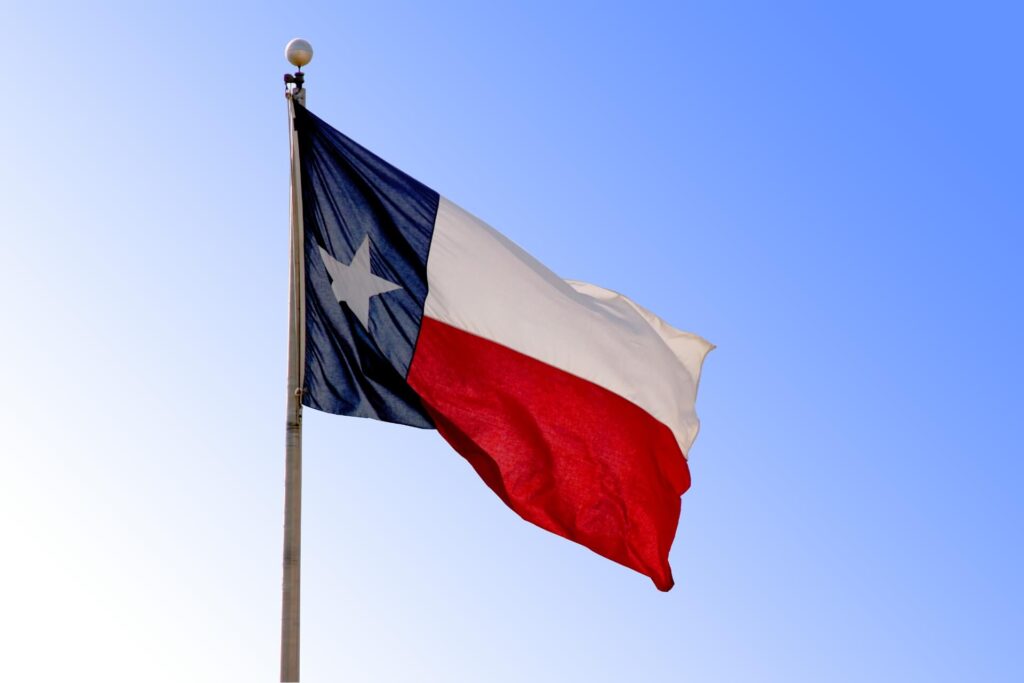
Did you know that Texas is nicknamed “The Lone Star State”? The appellation is based on the state flag, a vertical band of blue, a symbol of loyalty, on which a five-pointed white star stands in the center, and two horizontal bands of the same width, white for strength and red for courage. The star, from which the state’s nickname originates, has a very important meaning for Texans. It symbolizes their pride and the independence from Mexico that they struggled to gain in 1836. But that’s not all. The star also stands for the republic that Texans founded after earning their freedom from Mexican rule. The Texas Republic lasted a full ten years before the state officially joined the United States.